


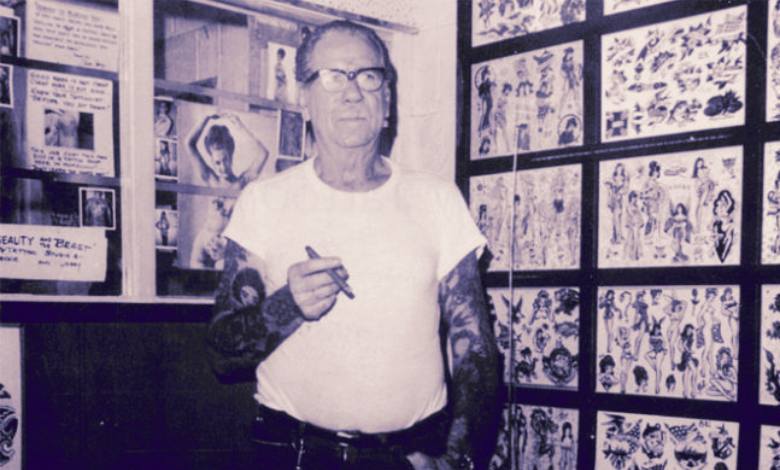
Sailor Jerry was the professional name of Norman Keith Collins, an American tattoo artist whose work became closely associated with Honolulu, Hawaii, and the development of American traditional tattooing. Known for bold designs, nautical imagery, and a disciplined approach to tattoo craft, Collins remains one of the most recognized figures in twentieth-century tattoo history.
His reputation is based less on celebrity and more on the long-term influence of his work. Collins worked during an era when tattooing was strongly connected with sailors, soldiers, working-class communities, and port cities. In Honolulu, he helped refine a visual language that combined American sailor tattoo traditions with influences from Asian tattoo art. This article focuses on verified facts about Sailor Jerry’s life, career, personal background, public image, and legacy, while clearly noting where public information is limited.
Also Read: Xen Martin Biography: Facts About Tisha Campbell’s Son
Featured Snippet Section
Who was Sailor Jerry?
Sailor Jerry was Norman Keith Collins, an American tattoo artist best known for his work in Honolulu, Hawaii. He became influential in American traditional tattooing through bold designs, nautical themes, and technical contributions to the tattoo craft.
What was Sailor Jerry’s real name?
Sailor Jerry’s real name was Norman Keith Collins. He was also referred to as Norman Collins, Norman “Sailor Jerry” Collins, and sometimes by initials or nicknames connected to his professional identity.
When was Sailor Jerry born and when did he die?
Sailor Jerry was born on January 14, 1911, and died on June 12, 1973. Public records and biographical sources list his age at death as 62.
Why is Sailor Jerry important in tattoo history?
Sailor Jerry is important because his designs helped shape the look of American traditional tattooing. His work is associated with bold outlines, strong color, sailor imagery, and the blending of American and Asian tattoo influences.
Where is Sailor Jerry buried?
Sailor Jerry is buried at the National Memorial Cemetery of the Pacific in Honolulu, Hawaii. The cemetery is also commonly known as the Punchbowl.
Profile Summary
| Field | Details |
|---|---|
| Full Name | Norman Keith Collins |
| Popular Name | Sailor Jerry |
| Profession | Tattoo artist |
| Also Known As | Norman Collins, Norman “Sailor Jerry” Collins |
| Born | January 14, 1911 |
| Birthplace | Reno, Nevada, United States |
| Died | June 12, 1973 |
| Age at Death | 62 |
| Death Place | Honolulu, Hawaii, United States |
| Nationality | American |
| Military Service | United States Navy |
| Spouse | Louise Collins |
| Burial Place | National Memorial Cemetery of the Pacific, Honolulu, Hawaii |
| Known For | American traditional tattoo designs and influence on tattoo culture |
Early Life and Background
Norman Keith Collins was born on January 14, 1911, in Reno, Nevada. Public biographical accounts state that he grew up in Northern California and developed an early interest in tattooing while traveling during his youth. These early experiences are often described as part of the background that shaped his later identity as “Sailor Jerry.”
Accounts of his early life commonly connect him with train travel, hand-poked tattooing, and early instruction from tattooers who worked before tattooing became a more formalized professional field. However, many details about his childhood and family background are limited in the public record. For that reason, a careful biography should avoid adding unsupported claims about his parents, siblings, schooling, or private circumstances.
Collins’ early exposure to tattooing placed him in a tradition that was practical, mobile, and often linked to sailors, travelers, and port-city communities. This context is important because his later work in Honolulu reflected many of the same themes: movement, maritime life, military culture, and personal symbolism.
Education
There is no widely documented public information confirming Sailor Jerry’s formal education. Available sources focus mainly on his tattoo career, his Navy service, his technical interests, and his life in Honolulu.
Because verified education details are limited, it would be inaccurate to claim that Collins attended a specific school, college, or art institution unless supported by a reliable primary or historical source. His artistic development is better understood through apprenticeship, travel, observation, technical experimentation, and professional practice.
Career and Professional Journey
Sailor Jerry’s tattoo career developed across several locations before becoming strongly associated with Hawaii. Public tattoo-history sources state that he traveled in his youth, learned early tattoo methods, and later connected with more experienced tattoo artists, including figures associated with electric tattooing.
Collins eventually settled in Hawaii, where he became known for tattooing sailors, servicemen, and other clients in Honolulu. His career grew in the setting of Hotel Street and Chinatown, areas historically linked to military shore leave and tattoo shops. His later studio address is widely listed as 1033 Smith Street in Honolulu.
His work stood out because it was not only decorative but also technically considered. He is often credited with improving tattoo colors, experimenting with needle arrangements, and supporting hygienic practices in tattooing. These contributions matter because tattooing in the early and mid-twentieth century did not have the same professional standards or public acceptance that it has in many places today.
Sailor Jerry’s designs drew from sailor tattoo imagery, American traditional motifs, and Japanese tattoo influence. Common themes associated with his work include ships, anchors, eagles, snakes, roses, dragons, banners, and other bold symbolic images. His style used strong outlines and clear compositions, features that remain central to American traditional tattooing.
Major Achievements and Recognition
Sailor Jerry’s major achievement was his lasting influence on American traditional tattooing. He helped refine a style that became recognizable for its bold structure, clean symbolism, and durability as body art.
His technical reputation is another important part of his career. Public accounts often credit him with attention to tattoo pigments, needle setups, sterilization, and design quality. These details suggest that Collins treated tattooing not only as a trade but also as a craft requiring precision, discipline, and innovation.
Another part of his recognition comes from his continued influence after death. His flash designs, visual style, and professional reputation have remained important to tattoo artists and historians. Documentaries, exhibits, tattoo-history writing, and public events have continued to discuss his place in tattoo culture.
Personal Life
Verified public information about Sailor Jerry’s personal life is limited. He was married to Louise Collins, who is listed in public biographical profiles as his spouse. Some public sources also refer to children, but detailed family information is not as widely documented as his career.
Collins also had interests beyond tattooing. Historical profiles mention maritime work, music, radio, and technical skills. These interests support the picture of a multi-skilled person whose identity was closely tied to both tattoo culture and seafaring life.
He died on June 12, 1973, in Honolulu, Hawaii. He was buried at the National Memorial Cemetery of the Pacific, reflecting his military service in the United States Navy.
Philanthropy and Public Engagement
There is no strong, widely available public record showing Sailor Jerry’s involvement in formal philanthropy, nonprofit work, or organized charitable campaigns. For accuracy, this section should not claim charitable activity without reliable documentation.
His public engagement is better understood through his work as a tattoo artist, his influence on other tattooers, and his role in the Honolulu tattoo scene. His professional correspondence, designs, and shop culture contributed to how later generations understood American traditional tattooing.
Public Perception and Misconceptions
Sailor Jerry is often remembered as a major figure in old-school tattooing. Among tattoo artists and tattoo-history readers, he is viewed as one of the people who helped shape a lasting visual style. His name has become closely connected with bold lines, nautical themes, and classic American tattoo imagery.
One common misconception is that Sailor Jerry “invented” American traditional tattooing by himself. A more accurate statement is that he was one of the most influential figures in the style. Tattooing developed through many artists, cultural exchanges, sailors, military communities, and regional traditions.
Another misconception is that Sailor Jerry was only a brand name. In fact, Sailor Jerry was a real person: Norman Keith Collins. Later commercial uses of the name should be separated from the historical tattoo artist and his actual body of work.
A third misconception is that all designs labeled “Sailor Jerry style” are original Collins designs. Many modern works borrow from the broader American traditional style. Some may be inspired by Collins, but that does not automatically make them his original artwork.
Also Read: Chewy Thompson Biography: TikTok Star Who Went Viral
Privacy and Limited Public Information
Like many historical tattoo artists, Sailor Jerry did not live in an era where every personal detail was preserved in digital records. Public information is strongest around his professional career, Navy service, death, burial, and artistic influence.
Details about his private family life, formal education, childhood household, and personal relationships are limited. A responsible biography should clearly separate verified facts from repeated but weakly sourced claims. Where reliable evidence is not available, it is better to state that the information is not publicly documented.
This approach is important for trustworthiness. Sailor Jerry’s legacy does not require exaggeration. His documented career and artistic influence are strong enough without adding unsupported personal details.
Legacy and Influence
Sailor Jerry’s legacy rests on his contribution to the visual and technical development of tattooing. His work helped define the public image of American traditional tattoo art: bold, readable, symbolic, and built to last over time.
His influence can be seen in the continued popularity of old-school tattoo motifs. Ships, anchors, birds, roses, banners, and strong-lined designs remain widely used by tattoo artists who work in traditional styles. While not every traditional tattoo can be traced directly to Collins, his role in shaping the style is widely recognized.
His life also reflects a broader history of tattooing in America. During much of the twentieth century, tattooing was often associated with sailors, soldiers, travelers, and people outside mainstream professional culture. Today, tattooing is more visible in art, fashion, and popular culture. Sailor Jerry’s career helps explain part of that transition.
FAQ Section
What style of tattooing is Sailor Jerry known for?
Sailor Jerry is known for American traditional tattooing. This style often uses bold outlines, clear shapes, strong color, and classic symbols such as ships, anchors, eagles, snakes, roses, and banners.
Was Sailor Jerry in the Navy?
Yes. Public memorial records identify Norman Keith Collins as having served in the United States Navy. His Navy experience also connects with the sailor imagery that became central to his public identity and tattoo work.
Did Sailor Jerry work in Hawaii?
Yes. Sailor Jerry is strongly associated with Honolulu, Hawaii. His tattoo work there became an important part of his reputation, especially through his connection to the city’s military and sailor communities.
Is Sailor Jerry the same as Norman Collins?
Yes. Sailor Jerry was the professional name of Norman Keith Collins. The name became widely recognized in tattoo culture and later in popular culture.
Is detailed information about Sailor Jerry’s family available?
Only limited personal information is widely documented. Louise Collins is publicly listed as his spouse, but many private family details are not consistently available in reliable public sources.
Conclusion
Sailor Jerry, born Norman Keith Collins, was an American tattoo artist whose career became closely linked with Honolulu and the development of American traditional tattooing. Born on January 14, 1911, and deceased on June 12, 1973, he left behind a reputation built on bold design, technical attention, and lasting influence.
The most reliable facts about his life concern his identity, tattoo career, Navy service, Honolulu work, spouse, death, and burial at the National Memorial Cemetery of the Pacific. Other areas, including formal education, private family background, and philanthropy, are less clearly documented and should be treated carefully.
His legacy remains important because his work helped shape how many people understand classic American tattoo art. Sailor Jerry was not the only creator of the tradition, but he was one of its most influential figures.