

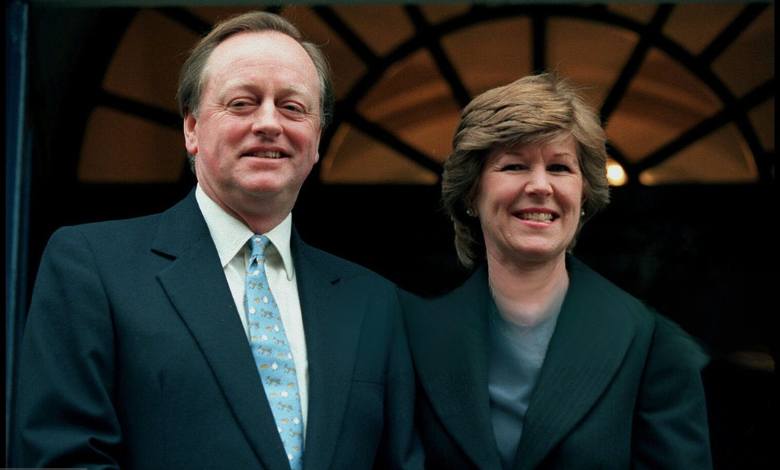
Rosemary Dickinson, also known publicly as Rosemary Pitman and later Rosemary Parker Bowles, is most often remembered because of her marriage to Brigadier Andrew Parker Bowles, the former husband of Queen Camilla. However, her life should not be reduced only to that connection. The verified public record shows a woman whose personal history included family life, a previous marriage, children, and a later marriage that placed her near one of Britain’s most closely observed social circles.
Because Rosemary was not a celebrity and did not appear to seek public attention, information about her is limited. This makes accuracy especially important. A responsible biography should separate confirmed details from assumptions and avoid turning a private life into speculation. Publicly available genealogical records identify her as Rosemary Alice Dickinson, born in Northumberland, England, and the daughter of Robert Joicey Dickinson and Alice Penelope Barnett.
Early Life and Family Background
Rosemary Alice Dickinson was born on June 17, 1940, in Northumberland, United Kingdom. Her family background is usually mentioned in genealogical and peerage-style references rather than in mainstream celebrity profiles. These records list her parents as Robert Joicey Dickinson and Alice Penelope Barnett, but they do not provide extensive detail about her childhood, education, personal interests, or early ambitions.
This lack of public information is important to acknowledge. Many online biographies of people connected to royal or aristocratic circles tend to fill gaps with assumptions about upbringing, lifestyle, or personality. In Rosemary Dickinson’s case, that approach would not be appropriate. The available record supports only a limited outline of her early life, not a detailed portrait of her private experiences.
Her connection to well-documented family lines has made her name appear in genealogical databases and biographical summaries. Still, those sources mainly establish dates, family relationships, and marriages. They do not provide enough evidence to make strong claims about her education, career path, or social role before her later public association with Andrew Parker Bowles.
Marriage, Children, and Life Before Andrew Parker Bowles
Before marrying Andrew Parker Bowles, Rosemary was known by the married name Rosemary Pitman. She was previously married to Lieutenant-Colonel John Hugh Pitman, and the marriage produced three sons. Public records and notices identify her children from that first marriage as Henry Pitman, William Pitman, and Thomas Pitman.
This part of her life appears to have been largely private. Unlike public figures whose family lives are closely covered by the media, Rosemary’s first marriage and motherhood are documented mainly through family references, notices, and genealogical records. There is no strong public evidence that she sought media attention during this period.
Her role as a mother is one of the clearest verified aspects of her life before Andrew Parker Bowles. However, it is important not to overstate what is known. While her son Henry Pitman was quoted after her death speaking about her courage during illness, public sources do not provide enough material to reconstruct the full private life of the family.
Marriage to Andrew Parker Bowles
Rosemary Dickinson married Andrew Parker Bowles in 1996, after his divorce from Camilla Shand. Andrew Parker Bowles was a British Army officer who rose to the rank of brigadier and had been married to Camilla from 1973 until their divorce in 1995. Vogue’s account of Camilla and Andrew’s first marriage notes that Andrew remarried in 1996 to Rosemary Pitman.
This marriage is the main reason Rosemary Dickinson remains a subject of public search interest. Andrew Parker Bowles’ earlier marriage to Camilla, who later married King Charles III and became Queen Camilla, gives Rosemary’s name a place in the broader story of Britain’s royal-adjacent social history. Yet Rosemary herself was not a royal figure, and she did not hold a public royal role.
The marriage lasted until Rosemary’s death in 2010. Contemporary notices described her as having been married to Brigadier Andrew Parker Bowles for 14 years. This confirms that their relationship was not merely a passing association but a significant chapter in both their lives.
Also Read: Who Is Erika Wulff Jones? Alex Jones’ Wife and Yoga Instructor Profile
Her Connection to Royal Public Interest
Rosemary Dickinson’s public profile is closely tied to Andrew Parker Bowles’ connection with Camilla. This can sometimes create confusion. Rosemary was not part of the British royal family. She became publicly relevant because she married a man whose first wife later became Queen Camilla.
That distinction matters. A factual biography should not present Rosemary as a royal personality or suggest she had an official role in royal life. Her connection was social and marital, not constitutional or institutional. Vogue notes that Camilla attended Rosemary Pitman’s funeral, a detail that reflects the continuing public interest in the interconnected relationships around Andrew Parker Bowles and Camilla.
The public curiosity around Rosemary is therefore understandable, but it should be handled carefully. Her story sits near royal history, but it is not a royal biography in the traditional sense. The most accurate framing is that she was a private British woman whose second marriage connected her to a well-known public family network.
Private Life and Public Records
One of the defining features of Rosemary Dickinson’s biography is the limited amount of verified public information. She does not appear to have had the kind of public career, media presence, or published personal narrative that would allow for a detailed account of her views, personality, or daily life.
This does not make her story unimportant. Instead, it means the article should focus on what can be verified: her identity, family background, children, marriage, and death. Claims about her character, friendships, lifestyle, or private emotions should be avoided unless supported by reliable sources.
The available public record suggests that Rosemary’s life was lived mostly outside media attention. Even after marrying Andrew Parker Bowles, she did not become a high-profile public figure. Her presence in public memory is therefore more biographical than celebrity-driven.
Philanthropy and Public Engagement
There is no widely documented public record showing that Rosemary Dickinson had a major philanthropic profile, public campaign, charitable foundation, or formal public engagement role. Because of that, it would be misleading to present her as a public philanthropist without evidence.
This does not mean she was uninvolved in personal or community life. It simply means that no reliable public record clearly documents a formal philanthropic legacy. In responsible biographical writing, the absence of documentation should be stated plainly rather than filled with attractive but unsupported claims.
Many private individuals contribute to family, local communities, or social circles without leaving a detailed public archive. Rosemary may have been remembered personally by those who knew her, but a factual article must distinguish private remembrance from publicly verifiable achievements.
Illness, Death, and Final Years
Rosemary Parker Bowles died on January 10, 2010, in Wiltshire, United Kingdom. A contemporary funeral notice reported that she died after a four-year battle with cancer and stated that she died at her home near Malmesbury, Wiltshire.
There is a small inconsistency in some public references about her age at death. Genealogical records list her birth date as June 17, 1940, which would make her 69 when she died in January 2010. However, the funeral notice reported her age as 68. Because of this discrepancy, the most careful wording is to say that she died in January 2010, with most biographical summaries identifying her as 69 based on the June 1940 birth date.
Her son Henry Pitman was quoted in the funeral notice speaking about the family’s pride in her courage during her illness. The notice also mentioned that she had three children by her first marriage. These details provide one of the few public glimpses into how she was remembered by family.
Public Perception and Misconceptions
A common misconception is that Rosemary Dickinson was a member of the royal family. She was not. Her public recognition comes from her marriage to Andrew Parker Bowles, whose first wife was Camilla, later Queen Camilla. That connection places Rosemary near royal history, but it does not make her a royal figure.
Another misconception is that there is a large public record of Rosemary’s personal life. In reality, verified information is limited. Some online profiles may describe her personality or private life in broad terms, but unless those claims are backed by reliable sources, they should be treated cautiously.
A third misconception is that Rosemary’s identity exists only through Andrew Parker Bowles. While public interest in her name is clearly linked to him, she also had her own family background, first marriage, and children. A balanced article should acknowledge both realities: she was privately her own person, while publicly she is mostly remembered through her marriage connection.
Also Read: David Martínez Investor Profile: Early Life, Career, and Business Influence
Legacy and Future Public Interest
Rosemary Dickinson’s legacy is not the kind attached to a public career, political office, or celebrity profile. It is quieter and more limited in the public record. She is remembered through family references, genealogical listings, contemporary death notices, and accounts of Andrew Parker Bowles’ life after his marriage to Camilla.
Future public interest in Rosemary will likely remain connected to searches about Andrew Parker Bowles, Queen Camilla’s earlier life, and the broader social circle around the British royal family. That interest should not be treated as an invitation to exaggerate her life. Instead, it should encourage careful writing that respects the difference between public curiosity and verified biography.
Her story also shows why private individuals connected to famous people require a different editorial approach. They deserve factual coverage, but not unnecessary intrusion. For Rosemary Dickinson, the most accurate legacy is that of a private woman whose life intersected with a highly public chapter of British social history.
FAQs About Rosemary Dickinson
Who was Rosemary Dickinson?
Rosemary Dickinson was a British woman best known as the second wife of Andrew Parker Bowles.
When was Rosemary Dickinson born?
Rosemary Dickinson was born on June 17, 1940, in Northumberland, United Kingdom.
Who was Rosemary Dickinson married to?
Rosemary Dickinson was married to Andrew Parker Bowles from 1996 until her death in 2010.
Conclusion
Rosemary Dickinson was a British woman best known publicly as Rosemary Pitman and later Rosemary Parker Bowles, the second wife of Brigadier Andrew Parker Bowles. Born in Northumberland in 1940, she was the daughter of Robert Joicey Dickinson and Alice Penelope Barnett, and she had three sons from her first marriage.
Her marriage to Andrew Parker Bowles in 1996 brought her name into wider public awareness because of Andrew’s previous marriage to Camilla Shand, later Queen Camilla. Still, Rosemary herself remained a private figure, and there is limited verified information about her personal life, education, career, or public activities.
She died in Wiltshire on January 10, 2010, after an illness widely reported as cancer. The most respectful and accurate way to write about Rosemary Dickinson is to focus on confirmed facts, acknowledge the limits of public data, and avoid turning a private life into speculation.