

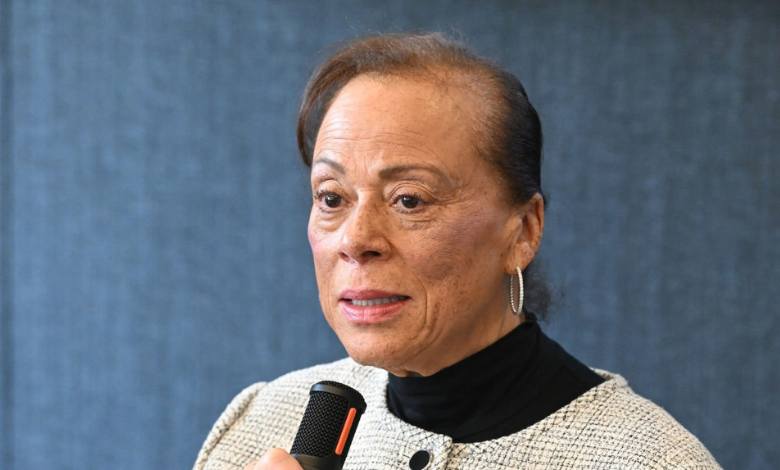
Lonnie Ali is best known as the wife of Muhammad Ali, the boxing champion and global humanitarian whose influence extended far beyond sports. Her public identity is closely tied to Ali’s later life, his business affairs, his public legacy, and the institutions created to preserve his values.
Born in Louisville, Kentucky, Lonnie Ali built her own educational and professional background before becoming a central figure in Muhammad Ali’s personal and public life. She studied at Vanderbilt University, later earned an MBA from UCLA, and worked in business before taking on a larger role in managing Ali’s commercial and philanthropic affairs.
This biography focuses on verified information about Lonnie Ali’s background, marriage, family life, public work, and legacy role. It avoids unsupported claims and treats private family information carefully where public documentation is limited.
Also Read: Noah Risling: What to Know About Eliana Kalogeras’ Boyfriend
Featured Snippet Section
Who is Lonnie Ali?
Lonnie Ali is an American public figure, business manager, and legacy advocate best known as Muhammad Ali’s wife. She married Ali in 1986 and remained married to him until his death in 2016. She has also been involved in preserving Ali’s humanitarian legacy through the Muhammad Ali Center and related public work.
Where was Lonnie Ali born?
Lonnie Ali is publicly described as a native of Louisville, Kentucky, United States. Louisville is also Muhammad Ali’s hometown, which makes the city an important part of both their public stories. Official biographical sources provide her hometown, but they do not consistently provide a full public birth date.
Was Lonnie Ali Muhammad Ali’s wife?
Yes. Lonnie Ali married Muhammad Ali in November 1986. She was his fourth wife and remained married to him until his death on June 3, 2016. During their marriage, she became closely involved in his business affairs, public appearances, and humanitarian initiatives.
Does Lonnie Ali have children?
Lonnie Ali and Muhammad Ali are publicly associated with their son, Asaad Amin. Publicly available accounts state that the couple adopted Asaad when he was an infant. Detailed information about his private family life should be handled carefully because not all personal details are documented in official sources.
What is Lonnie Ali known for?
Lonnie Ali is known for her marriage to Muhammad Ali, her business management role in his later career, and her work connected to the Muhammad Ali Center. She has also been publicly associated with Parkinson’s disease advocacy, children’s rights, and efforts to preserve Ali’s values of service, compassion, and civic responsibility.
Profile Summary
| Field | Details |
|---|---|
| Full Name | Lonnie Ali |
| Also Known As | Yolanda “Lonnie” Williams Ali |
| Known For | Muhammad Ali’s wife, business manager, legacy advocate |
| Born | Louisville, Kentucky, United States |
| Nationality | American |
| Spouse | Muhammad Ali |
| Marriage | 1986–2016 |
| Child | Asaad Amin |
| Mother | Marguerite Williams, reported in public family references |
| Sibling | Marilyn Williams, reported in local media |
| Education | Vanderbilt University; UCLA Graduate School of Management |
| Career Background | Kraft Foods, business management, Ali legacy work |
| Public Work | Muhammad Ali Center, Parkinson’s advocacy, humanitarian engagement |
| Data Note | Some personal family details are not fully documented in official public records |
Early Life and Background
Lonnie Ali was born in Louisville, Kentucky, the same city strongly associated with Muhammad Ali’s early life. Public biographies describe her as a Louisville native, but they do not always provide detailed information about her childhood, exact birth date, or early family environment.
Her birth name is widely reported as Yolanda Williams. “Lonnie” became the name by which she is best known publicly. Some public family references identify her mother as Marguerite Williams, while local reporting has identified Marilyn Williams as her sister. However, detailed family records are not extensively available through official biographical sources.
Because Lonnie Ali’s public profile is mostly connected to education, marriage, business management, and legacy work, reliable information about her private early years remains selective. A factual biography should avoid filling those gaps with assumptions.
Education
Lonnie Ali’s education is one of the more clearly documented parts of her public biography. She completed a Bachelor of Arts degree at Vanderbilt University in Nashville, Tennessee, in 1978. This detail appears in institutional biographies and is relevant because it shows she had a formal academic background before her marriage to Muhammad Ali.
She later continued her studies at UCLA’s Graduate School of Management, now known as the UCLA Anderson School of Management. Public sources state that she earned an MBA in 1986, with an emphasis in marketing.
Her education supports a broader understanding of her later role in Muhammad Ali’s business affairs. Lonnie Ali was not only a spouse in Ali’s public life; she also had training in business, marketing, and management that became relevant to the organization of his commercial identity and intellectual property.
Career and Professional Journey
After completing her undergraduate degree, Lonnie Ali began her business career with Kraft Foods. Public biographies describe her early work as sales or account sales related, depending on the source. Some accounts also mention a brief role as an employment counselor for the State of Kentucky before her corporate career.
Her professional journey changed significantly after her marriage to Muhammad Ali in 1986. She became involved in coordinating and later managing his business affairs. This role became especially important because Ali’s name, image, and public identity carried major commercial and cultural value.
In 1992, Lonnie Ali formally incorporated Greatest of All Time, Inc., often called GOAT Inc. The company was created to centralize and license Muhammad Ali’s intellectual property for commercial purposes. She served in senior roles with the company, including vice president and treasurer, until its sale in 2006.
Her work with GOAT Inc. shows a practical business role rather than a symbolic one. She helped organize Ali’s public brand, licensing structure, and business operations during a period when athlete legacy management became increasingly important in sports and entertainment.
Also Read: Ava Brown: Facts About Millie Bobby Brown’s Younger Sister
Major Achievements and Recognition
Lonnie Ali’s major achievements are linked to business management, public service, and institutional legacy work. Her role in GOAT Inc. stands out because it involved formal responsibility for Muhammad Ali’s intellectual property and commercial affairs.
Another significant achievement is her involvement with the Muhammad Ali Center in Louisville. Lonnie Ali and Muhammad Ali opened the center in 2005. The center was created to preserve Ali’s legacy and promote values such as respect, conviction, compassion, and understanding across communities.
She has also been connected with the Muhammad Ali Parkinson’s Center in Phoenix. Public biographies state that Lonnie and Muhammad Ali helped launch the center in 1997, and later unveiled the Muhammad and Lonnie Ali Pavilion in 2009.
Lonnie Ali has served in leadership and board roles connected to the Ali legacy. Official biographical materials list her as a Lifetime Director and Vice Chair of the Muhammad Ali Center’s board, and recent public materials also identify her in an interim leadership role at the center.
Personal Life
Lonnie Ali married Muhammad Ali in November 1986. Their marriage lasted until Ali’s death in 2016. This thirty-year marriage placed her beside one of the most recognized athletes and public figures of the twentieth century during his later public life.
Public accounts describe Lonnie Ali as a major presence in Ali’s later years. She accompanied him on business trips and humanitarian initiatives, and she became involved in managing his public affairs. However, responsible writing should avoid private medical or family details unless they come from reliable public sources.
Lonnie Ali and Muhammad Ali are publicly associated with their son Asaad Amin. Available public information states that the couple adopted him as an infant. Beyond that, detailed personal family information should be presented with caution, especially when it concerns private individuals.
Philanthropy and Public Engagement
Lonnie Ali’s public engagement is strongly connected to Muhammad Ali’s humanitarian identity. She has been involved with the Muhammad Ali Center, which promotes Ali’s values and public message for future generations. This work connects her to education, civic service, interfaith respect, and community engagement.
She has also been publicly associated with Parkinson’s disease advocacy. Muhammad Ali lived with Parkinson’s disease for decades, and Lonnie Ali’s public work has included support for research and awareness connected to the condition. Her role around the Muhammad Ali Parkinson’s Center further reflects that public engagement.
Official materials also note her involvement in charitable causes, including children’s rights and Parkinson’s disease research. From 2010 to 2013, she served on the Presidential Commission for the Study of Bioethical Issues, which reflects public service beyond her role as Muhammad Ali’s spouse.
Public Perception and Misconceptions
Public perception of Lonnie Ali often centers on her role as Muhammad Ali’s wife and widow. That description is accurate, but it is incomplete. Her documented work also includes business management, institutional leadership, and public advocacy connected to Ali’s name and values.
One common misconception is that Lonnie Ali’s public role began and ended with marriage. Verified biographical sources show that she had a strong educational background, worked in business, and later helped manage Ali’s commercial affairs through GOAT Inc.
Another misconception is that every detail of her family life is publicly documented. In reality, official sources provide clear information on her education, marriage, business role, and legacy work, but less detail on her private family background. A responsible biography should acknowledge those limits rather than add unsupported claims.
A third misconception is that her legacy work is only ceremonial. The record shows a more active role. Her involvement in business management, Parkinson’s advocacy, and the Muhammad Ali Center points to continuing public responsibility around Ali’s institutional and humanitarian legacy.
Privacy and Limited Public Information
Lonnie Ali has a public profile, but not all parts of her life are documented in detail. Her exact birth date, extended family history, and private life after Muhammad Ali’s death are not consistently covered in official sources.
This does not reduce the importance of her public role. It simply means that a fact-based biography should separate confirmed public information from claims that appear only in weaker or unsourced profiles. Details about relatives, private routines, personal relationships, or financial matters should not be added without reliable confirmation.
The most reliable areas of information are her education, marriage to Muhammad Ali, business work with GOAT Inc., involvement with the Muhammad Ali Center, and public advocacy connected to Parkinson’s disease and humanitarian service.
Legacy and Influence
Lonnie Ali’s influence is closely tied to the preservation of Muhammad Ali’s legacy. She helped manage the business side of Ali’s public identity and supported institutions that continue to present his life as more than a boxing story.
Through the Muhammad Ali Center, her public work connects Ali’s name to education, service, social responsibility, and global understanding. This is important because Ali’s legacy includes sports excellence, civil rights, religious identity, humanitarian action, and public courage.
Her influence is also visible in the way Ali’s story continues to be framed for new generations. Instead of focusing only on championship titles, the public institutions connected to his name highlight values such as compassion, conviction, and service. Lonnie Ali’s continuing association with that work gives her a meaningful place in the broader public memory of Muhammad Ali.
FAQ Section
What is Lonnie Ali’s real name?
Lonnie Ali is widely identified as Yolanda “Lonnie” Williams Ali. Publicly, she is best known as Lonnie Ali, the name used in institutional biographies, news coverage, and Muhammad Ali legacy materials.
When did Lonnie Ali marry Muhammad Ali?
Lonnie Ali married Muhammad Ali in November 1986. Their marriage continued until Muhammad Ali’s death on June 3, 2016. She was his fourth wife and was closely involved in his later public life and business affairs.
What did Lonnie Ali study?
Lonnie Ali earned a Bachelor of Arts degree from Vanderbilt University in 1978. She later earned an MBA from UCLA’s Graduate School of Management in 1986, with public sources noting an emphasis in marketing.
What is Lonnie Ali’s connection to the Muhammad Ali Center?
Lonnie Ali and Muhammad Ali opened the Muhammad Ali Center in Louisville in 2005. The center was created to preserve Ali’s legacy and promote values connected to service, respect, and understanding.
Who is Lonnie Ali’s child?
Lonnie Ali and Muhammad Ali are publicly associated with their son Asaad Amin. Public accounts state that the couple adopted him as an infant. Further private details should be handled carefully unless supported by reliable sources.
Conclusion
Lonnie Ali’s biography is best understood through verified facts: she is a Louisville native, Vanderbilt graduate, UCLA MBA holder, former Kraft Foods professional, Muhammad Ali’s wife from 1986 to 2016, and a central figure in preserving Ali’s public legacy.
Her work with GOAT Inc., the Muhammad Ali Center, and Parkinson’s-related advocacy shows that her role extended beyond family life. While some personal details remain limited in public records, the available evidence presents Lonnie Ali as an educated business figure, public advocate, and important steward of Muhammad Ali’s humanitarian legacy.