

Matt Mattox Biography: American Dancer, Choreographer, and Jazz Dance Educator

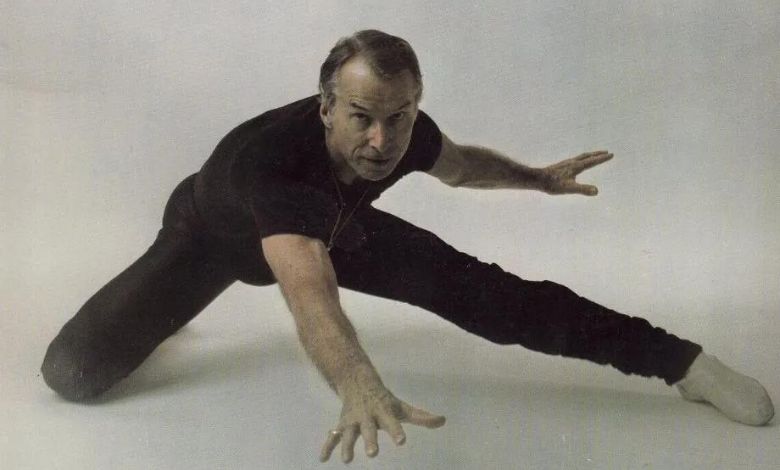
Matt Mattox was an American dancer, choreographer, actor, and dance educator whose career connected Hollywood musicals, Broadway theatre, and modern jazz dance training. Born Harold Henry Mattox in Tulsa, Oklahoma, he became widely known by his stage name and later gained recognition as one of the important figures in theatrical jazz dance.
Mattox is often remembered by general audiences for his role as Caleb Pontipee in the 1954 MGM musical Seven Brides for Seven Brothers. In dance history, however, his influence extends beyond screen performance. He developed a structured approach to jazz training, often associated with precision, rhythm, isolation, and ballet-based control.
His professional life moved across several fields: film, Broadway, choreography, and education. In later decades, he became especially active as a teacher in Europe, where his work helped preserve and expand jazz dance technique for new generations of performers.
A note on public records is important. Some sources list Matt Mattox’s birth date as August 16, 1921, while others list August 18, 1921. This article treats the discrepancy transparently and avoids overstating details where public documentation differs.
Also Read: Berkley Silverman Biography: Canadian Actor, PAW Patrol Voice Role, and Career Facts
Featured Snippet Section
Who was Matt Mattox?
Matt Mattox was an American dancer, choreographer, actor, and dance educator. Born Harold Henry Mattox in Tulsa, Oklahoma, he became known for Broadway work, Hollywood musical performances, and jazz dance teaching. His career is closely linked to mid-20th-century musical theatre, classic film dance, and structured jazz technique.
What was Matt Mattox famous for?
Matt Mattox was famous for his work as a dancer in Hollywood musicals and for his later influence as a jazz dance educator. His best-known film role was Caleb Pontipee in Seven Brides for Seven Brothers. Dance students also recognize him for developing a precise, disciplined jazz training method.
What is the Matt Mattox jazz technique?
The Matt Mattox jazz technique refers to his structured system of jazz dance training. It emphasizes isolation, coordination, rhythm, alignment, strength, and movement clarity. His method drew from ballet, tap, modern dance, and theatrical jazz, making it useful for performers who needed both technical control and stage expression.
Was Matt Mattox in Seven Brides for Seven Brothers?
Yes. Matt Mattox appeared in the 1954 musical film Seven Brides for Seven Brothers, playing Caleb Pontipee. The film remains one of his most searched screen credits. His performance helped connect his public image with the energetic dance style of classic Hollywood musicals.
When did Matt Mattox die?
Matt Mattox died on February 18, 2013, in Perpignan, France. He was 91 years old. By the time of his death, he had built a long career as a dancer, choreographer, film performer, Broadway artist, and jazz dance teacher.
Profile Summary
| Field | Details |
|---|---|
| Full Name | Harold Henry Mattox |
| Stage Name | Matt Mattox |
| Profession | Dancer, choreographer, actor, dance educator |
| Known For | Jazz dance technique, Broadway work, Hollywood musicals |
| Born | August 16, 1921; some databases list August 18, 1921 |
| Birthplace | Tulsa, Oklahoma, United States |
| Died | February 18, 2013 |
| Place of Death | Perpignan, France |
| Age at Death | 91 |
| Nationality | American |
| Spouse | Martine Limeul; some databases also list an earlier marriage to Jean Marie Caples |
| Notable Film Role | Caleb Pontipee in Seven Brides for Seven Brothers |
| Main Career Areas | Film, Broadway, choreography, dance education |
| Dance Association | Jazz dance, theatrical dance, freestyle dance |
| Later Career Base | Europe, especially France |
Early Life and Background
Matt Mattox was born Harold Henry Mattox in Tulsa, Oklahoma. His early life included a move to California, where he began developing the dance foundation that later shaped his professional identity.
Public accounts state that he moved with his family to California in the early 1930s. This relocation placed him closer to Los Angeles, a major center for theatre, film, and dance training. That environment gave him access to the performance world at a young age.
Mattox trained in several dance forms, including ballet, tap, and modern dance. This varied training became important in his later work. His jazz style did not come from one source alone. It reflected a disciplined combination of rhythm, alignment, musicality, and theatrical movement.
His background also shows how mid-20th-century dancers often needed broad technical skills. Performers working in film and theatre had to move across styles, respond to choreography quickly, and maintain strong stage presence. Mattox’s early training prepared him for that professional landscape.
Education
Publicly available information about Matt Mattox’s formal academic education is limited. Several biographical sources connect him with schooling in California after his family’s move from Oklahoma, but most public attention focuses on his dance training rather than academic credentials.
His education as a performer was built through practical and technical study. He trained in ballet, tap, modern dance, and jazz-related theatrical movement. Ballet gave him structure and alignment. Tap contributed rhythm and timing. Modern dance supported expressive movement and body control.
This combination later became central to his reputation as a teacher. Mattox did not treat jazz dance as casual movement. He approached it as a disciplined form with clear technique, physical accuracy, and musical understanding.
Because complete academic records are not widely documented in public sources, a responsible biography should avoid adding unsupported claims about degrees or institutions beyond what can be verified.
Career and Professional Journey
Early Stage and Performance Work
Matt Mattox entered professional performance during a period when American musical theatre and Hollywood musicals were closely connected. Dancers often moved between stage productions, film sets, and live performance work. Mattox followed this broader professional pattern.
His early career included stage work and Broadway credits. Broadway gave him a demanding performance environment where dancers needed acting ability, musical timing, and technical discipline. This experience helped shape his identity as more than a screen dancer.
Broadway Career
Mattox worked as a Broadway performer and later as a choreographer. His Broadway credits connected him to musicals from the 1940s through the 1960s. Public theatre databases list him in productions such as Brigadoon, Say, Darling, The Vamp, and Once Upon a Mattress.
His Broadway work matters because it places him within the professional theatre system of his time. He was not simply a film performer who appeared in dance scenes. He was part of a larger community of musical theatre artists who shaped American stage performance.
As a choreographer, Mattox also contributed to Broadway productions. This movement from performer to choreographer reflects a common career path among technically skilled dancers. It also shows that his work was valued not only for execution but also for creative direction.
Hollywood Musical Career
Matt Mattox’s screen career placed him within the classic era of Hollywood musical filmmaking. During this period, film studios relied on highly trained dancers who could combine athletic movement, character performance, and camera awareness.
His most recognized film role was Caleb Pontipee in Seven Brides for Seven Brothers. The film remains a major reference point in his public profile because it is widely remembered and often discussed in relation to classic musical choreography.
Mattox also appeared in other film and television credits, according to entertainment databases. His screen work helped preserve his dance style for later audiences, while his teaching career carried his method into studio and classroom settings.
Choreography and Teaching
After his major stage and screen years, Mattox increasingly focused on choreography and education. This shift became one of the most important parts of his legacy. He taught in the United States and later became especially active in Europe.
His approach to jazz dance was structured and technical. He emphasized isolation, rhythm, coordination, body placement, and movement clarity. These qualities helped distinguish his method from more informal ideas about jazz dance.
In Europe, he became an influential teacher and helped develop a stronger base for jazz dance training. His later career in France gave him a lasting place in international dance education, not only American entertainment history.
Also Read: Ramón Juárez Biography: Mexican Footballer, Club América Defender, and Career Facts
Major Achievements and Recognition
Matt Mattox’s achievements can be understood through three connected areas: performance, choreography, and teaching.
As a performer, he worked in Broadway musicals and Hollywood films during an important era for theatrical dance. His role in Seven Brides for Seven Brothers remains his most recognizable screen credit and continues to introduce new viewers to his work.
As a choreographer, he contributed to stage productions and developed movement ideas shaped by his own training. His choreography reflected technical precision rather than loose improvisation alone.
As a teacher, he built one of his strongest legacies. His jazz dance method became associated with structure, control, and disciplined musicality. For dance students, Mattox is often more important as an educator than as a film actor.
His recognition is therefore not limited to celebrity status. He is remembered as a professional artist whose career bridged entertainment and pedagogy. That combination gives his biography continuing value for dance historians, theatre researchers, and performers.
Personal Life
Matt Mattox’s later spouse was Martine Limeul, a dancer associated with his life and work in France. Public sources commonly connect her with his later years and his teaching activity in Europe. They were married from 1981 until his death in 2013.
Some public databases also list an earlier marriage to Jean Marie Caples. Because personal-life information is limited and varies by source, this topic should be handled carefully in biographical writing.
The most consistently documented personal detail is his later life in France, particularly his association with Perpignan. His move to Europe was not only personal. It also became professionally significant because it placed him within European dance education and jazz training circles.
There is limited verified public information about his private family life. A factual article should avoid speculation about relationships, family dynamics, or personal beliefs unless supported by reliable documentation.
Philanthropy and Public Engagement
There is no widely documented public record of formal philanthropy connected to Matt Mattox. Public information focuses mainly on his work as a dancer, choreographer, and educator.
His most visible form of public engagement was through teaching. By training dancers and developing a recognizable jazz method, he contributed to dance education in a practical and long-term way.
This section should not claim charitable activity without evidence. In Mattox’s case, his public contribution is better described as educational and artistic rather than philanthropic.
Public Perception and Misconceptions
Matt Mattox is often remembered differently depending on the audience. Film viewers may recognize him from Seven Brides for Seven Brothers. Dance students and teachers are more likely to know him through jazz technique and studio training.
One misconception is that he was only a film actor. That view understates his broader career. Mattox worked in theatre, choreography, and dance education, and his teaching legacy remains central to his reputation.
Another misconception is that his legacy depends mainly on one film role. While Seven Brides for Seven Brothers is important, it does not fully represent his contribution. His influence in jazz dance training continued long after his screen career.
A third misconception involves biographical certainty. Public records do not always agree on every detail, including his exact birth date. A reliable biography should acknowledge such differences instead of presenting uncertain information as settled fact.
Privacy and Limited Public Information
Matt Mattox had a public career, but not every part of his life is fully documented. Reliable public information is strongest in areas such as film credits, Broadway work, teaching history, spouse references, death details, and dance legacy.
Information about his private family life, personal views, and everyday relationships is more limited. For that reason, responsible coverage should focus on what can be verified.
This is especially important for older entertainers and stage artists. Public records may be incomplete, and entertainment databases can differ. A neutral biography should explain gaps clearly and avoid filling them with assumptions.
The best editorial approach is to center Mattox’s professional work: his dance training, Broadway performance, film roles, choreography, teaching method, and contribution to jazz dance.
Legacy and Influence
Matt Mattox’s legacy lies in his ability to connect performance and education. He came from a generation of dancers trained for stage and screen, yet his later impact came through teaching and technique.
His jazz method helped present jazz dance as a disciplined form. It required strength, rhythm, musical awareness, isolation, and control. This made his work valuable for serious dance training, not only entertainment performance.
His move to Europe also expanded his influence. By teaching in countries such as England and France, he helped transmit American jazz dance ideas to international students and professionals.
Today, his name remains relevant in discussions of jazz dance history, Hollywood musical dance, and theatrical performance training. His career shows how a dancer can influence both popular culture and formal dance education.
FAQ Section
What was Matt Mattox’s real name?
Matt Mattox’s real name was Harold Henry Mattox. He became publicly known by the stage name Matt Mattox during his career as a dancer, choreographer, actor, and dance educator.
Who was Matt Mattox married to?
Matt Mattox was married to Martine Limeul from 1981 until his death in 2013. Some public databases also list an earlier marriage to Jean Marie Caples, but most biographical summaries emphasize his later marriage to Limeul.
Why is Matt Mattox important in jazz dance?
Matt Mattox is important in jazz dance because he helped shape a structured, technique-based approach to the form. His method emphasized isolation, rhythm, alignment, strength, and musical control. His teaching career, especially in Europe, helped preserve his influence beyond film and Broadway.
What movie is Matt Mattox best known for?
Matt Mattox is best known to general audiences for appearing in Seven Brides for Seven Brothers. He played Caleb Pontipee in the 1954 MGM musical, a film that remains strongly associated with classic Hollywood dance.
Where did Matt Mattox die?
Matt Mattox died in Perpignan, France, on February 18, 2013. His later years in France were connected to his teaching career and his broader influence on European jazz dance education.
Conclusion
Matt Mattox was an American dancer, choreographer, actor, and dance educator whose career moved across Broadway, Hollywood musicals, and international dance teaching. Born Harold Henry Mattox in Tulsa, Oklahoma, he built a reputation through technical skill, stage discipline, and a serious approach to jazz dance.
His best-known screen role was Caleb Pontipee in Seven Brides for Seven Brothers, but his professional identity was wider than one film. He worked in theatre, choreography, and education, and his jazz technique became an important part of his long-term influence.
Verified public facts show a career defined by performance, teaching, and artistic discipline. Where information is limited or inconsistent, especially around personal details and birth-date records, a careful biography should state the gap clearly. Matt Mattox’s legacy remains strongest in dance history, where his method and teaching continue to represent a disciplined vision of theatrical jazz dance.