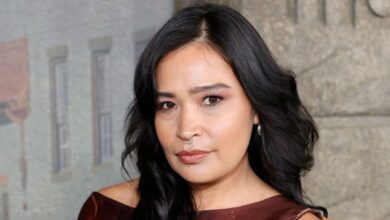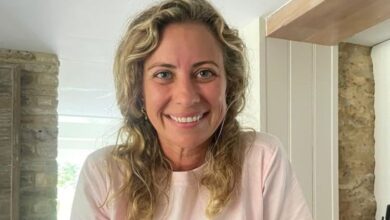


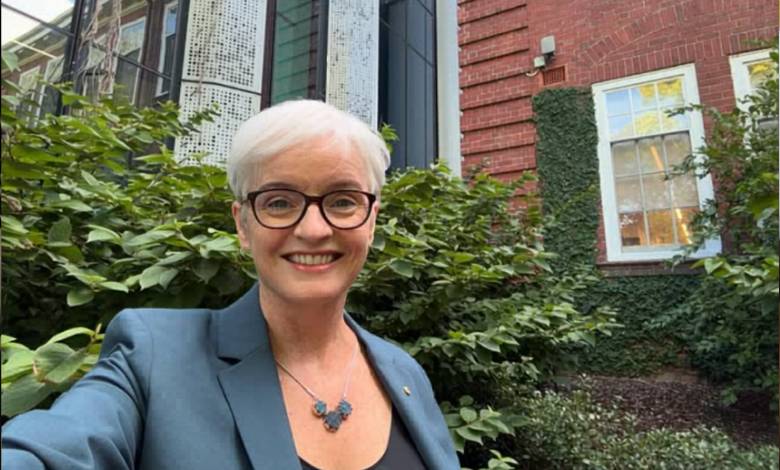
Emma Letitia Johnston AO was an Australian marine ecologist, academic leader, and public science advocate whose career connected research, higher education, environmental policy, and science communication. She became widely recognised for her work on the ecological effects of human activity in marine ecosystems and later for her senior leadership roles across major Australian universities.
Her career reached a historic point in February 2025, when she became the 21st Vice-Chancellor of the University of Melbourne. The appointment also marked her return to the university where she had completed undergraduate and postgraduate studies, including a Doctor of Philosophy in Marine Ecology. The University of Melbourne later confirmed that Johnston died from complications associated with cancer in December 2025, at the age of 52.
Emma Johnston Profile Summary Table
| Field | Details |
|---|---|
| Full Name | Emma Letitia Johnston AO |
| Known As | Emma Johnston |
| Profession | Marine ecologist, academic, university leader |
| Born | June 11, 1973 |
| Birthplace | Melbourne, Australia |
| Died | December 26, 2025 |
| Age at Death | 52 |
| Death Place | Melbourne, Australia |
| Cause of Death | Complications associated with cancer |
| Education | The University High School; University of Melbourne |
| Doctorate | PhD in Marine Ecology, University of Melbourne |
| Major Role | 21st Vice-Chancellor of the University of Melbourne |
| Previous Roles | Deputy Vice-Chancellor Research at University of Sydney; Dean of Science at UNSW |
| Research Field | Human impacts on marine ecosystems |
| Awards | Nancy Millis Medal for Women in Science; Clarke Medal; Officer of the Order of Australia |
| Spouse | Sam |
| Children | 2 |
| Public Data Note | Some personal and family details are limited publicly |
Early Life and Education
Emma Johnston was born on June 11, 1973, in Melbourne, Victoria, Australia. Publicly available information about her childhood is limited, and responsible biographical writing should not fill those gaps with assumptions. What is documented is her long connection to Melbourne and her later academic connection to the University of Melbourne.
Johnston attended The University High School in Melbourne before pursuing science at university level. She studied at the University of Melbourne, where she completed undergraduate and postgraduate work. Her academic path eventually led to a PhD in Marine Ecology, establishing the scientific foundation for the research career that followed.
Her education is important because it shaped both sides of her professional identity. She was not only a researcher with specialist knowledge of marine systems but also an academic leader who understood universities from the inside. That combination became central to her later roles at UNSW Sydney, the University of Sydney, and the University of Melbourne.
Career in Marine Ecology
Johnston built her scientific reputation in marine ecology, particularly through research into how human activities affect marine environments. Her work addressed issues such as pollution, marine debris, climate extremes, and ecological resilience. The University of Melbourne described her as a leading authority in marine ecology whose research examined human impacts on marine ecosystems and how those ecosystems can recover or adapt.
Her fieldwork and research leadership covered diverse marine environments, including the Great Barrier Reef, Antarctica, and temperate Australian estuaries around Sydney and Melbourne. This range matters because marine ecology is not a narrow laboratory subject. It involves coastal systems, pollution pathways, biodiversity, climate pressure, and the practical management of waterways used by communities, governments, and industries.
At the University of New South Wales, Johnston established a significant academic career. She rose to senior roles including Pro Vice-Chancellor Research and Dean of Science. She also led research teams and major projects connected with government, industry, and scientific institutions.
One of her notable public research roles was linked to the Sydney Harbour Research Program at the Sydney Institute of Marine Science. The Australian Academy of Science identified her as the inaugural Director of that program when announcing her Nancy Millis Medal in 2014.
Also Read: Chief Keef’s Daughter Kimora Sosha Cozart: What Is Publicly Known
Academic Leadership
Alongside her scientific work, Johnston became an influential academic administrator. Before joining the University of Melbourne as Vice-Chancellor, she served as Deputy Vice-Chancellor Research at the University of Sydney. She also held senior research and science leadership positions at UNSW Sydney.
Her appointment as Vice-Chancellor of the University of Melbourne in February 2025 was a major milestone. Public reporting noted that she became the first woman to lead the 172-year-old institution. Her leadership began at a time when Australian universities were facing complex challenges, including research funding pressures, student needs, international competition, and questions about the future role of universities in society.
Although her tenure was brief, the University of Melbourne credited her with bringing energy, optimism, and strategic focus to the institution. The university also noted her work on a new strategy called “Resilience,” which aimed to focus the university’s academic mission and collective intelligence.
Research Contributions and Publications
Johnston’s research focused on the ecological consequences of human pressure on marine systems. This included work related to pollution, ecotoxicology, climate impacts, marine debris, and the resilience of coastal ecosystems. Her scientific output was substantial: the University of Melbourne reported that she authored 185 peer-reviewed journal articles and supervised more than 35 higher degree students.
She was also a chief author of Australia’s State of the Environment Report. This role placed her work within a broader national conversation about environmental condition, risk, and policy. State of the Environment reporting is significant because it helps governments, researchers, and the public understand long-term changes affecting land, water, biodiversity, climate, and marine ecosystems.
Her scientific importance came not only from publishing research but also from connecting evidence to public understanding. Marine ecology can often feel distant from everyday life because much of the damage happens below the surface. Johnston’s public communication helped make those issues more visible.
Awards and Recognition
Johnston received several major honours during her career. In 2014, she won the inaugural Nancy Millis Medal for Women in Science. The Australian Academy of Science said the award recognised her leadership and ground-breaking research in marine ecology.
The Nancy Millis Medal is particularly relevant in her biography because it reflects both scientific achievement and leadership by women in science. UNSW also described her as the first recipient of the award and highlighted her research on human impacts on marine ecosystems.
In 2018, Johnston was made an Officer of the Order of Australia for distinguished service to higher education, especially in marine ecology, ecotoxicology, and scientific institutes. She was later elected a Fellow of the Australian Academy of Science in 2022 and was also recognised by the Australian Academy of Technological Sciences and Engineering.
Her honours also included the Clarke Medal, a major recognition connected with scientific achievement. These awards show that Johnston’s work was valued across research, higher education, public science, and institutional leadership.
Philanthropy and Public Engagement
There is limited public evidence of private philanthropy by Emma Johnston, so it would be inaccurate to describe her as a philanthropist without qualification. However, her public engagement is well documented through science communication, governance, advocacy, and institutional service.
She served as a Director of the CSIRO and the Great Barrier Reef Marine Park Authority, a Governor of the Ian Potter Foundation, and a former President of Science & Technology Australia. These roles show engagement beyond university teaching and research, particularly in science policy, environmental governance, and public trust in science.
Johnston was also known for communicating science to broader audiences. UNSW noted that she appeared on television as a co-star of Coast Australia, a series exploring Australia’s coastline.
After her death, her family established the Professor Emma Johnston Fund within the Australian Communities Foundation. According to the University of Melbourne, the fund aims to honour her commitment to marine ecology, research, and science communication, with priorities including early-career researchers, particularly women, time-critical research after catastrophic events, and effective public communication of research findings.
Personal Life and Privacy
Public reports identify Johnston’s husband as Sam and state that she had two children. Beyond that, reliable public information about her family life is limited. That limitation should be respected rather than treated as a gap to be filled with speculation.
The University of Melbourne also asked that her family’s privacy be respected after her death. In a factual biography, this matters. Johnston’s public significance came from her scientific, academic, and leadership work. Her private family life should be mentioned only where it has been publicly confirmed and is relevant to a balanced account of her life.
Also Read: Larenz Tate’s Son Miles Xavier Tate: Verified Facts and Family Details
Death and Public Response
Emma Johnston died in Melbourne on December 26, 2025, at the age of 52. The University of Melbourne stated that her death was due to complications associated with cancer.
Public tributes focused on her scientific leadership, her commitment to students, and her communication skills. The Guardian reported that she was remembered as an impactful communicator and dedicated educator, while also noting her role as the first woman to lead the University of Melbourne.
Her death was significant not only for the University of Melbourne but also for the wider research and higher education sectors. She had held senior roles in multiple leading institutions and had contributed to national science advocacy, environmental governance, and public understanding of marine science.
Public Perception and Misconceptions
One common misconception is that Johnston was mainly a university administrator. While her final public role as Vice-Chancellor brought wider attention, her career was rooted in marine ecology. She was a scientist with a long research record before she became a senior university executive.
Another misconception is that her University of Melbourne appointment defines her entire career. In reality, her professional life included major contributions at UNSW Sydney, the University of Sydney, the Sydney Harbour Research Program, Science & Technology Australia, CSIRO, and the Great Barrier Reef Marine Park Authority.
A third misconception is that all details of her personal life are public. They are not. Verified sources provide only limited family information. A responsible article should avoid unsupported details about her marriage, children, health history, or private relationships.
Legacy and Future
Emma Johnston’s legacy rests on three connected areas: marine ecology, academic leadership, and public science communication. Her research helped explain how human activity affects marine systems, especially through pollution, environmental stress, and ecosystem change. Her leadership roles placed that scientific perspective inside major institutions that shape education, research, and national policy.
Her influence also continues through students, colleagues, mentees, and the institutions where she worked. The University of Melbourne noted that her legacy would continue through the work of those she taught, supported, and led.
The future of her legacy will likely be seen in continued marine ecology research, stronger support for women in science, and public communication of environmental evidence. The Professor Emma Johnston Fund provides one formal mechanism for continuing work aligned with her values, especially early-career research and effective communication of science.
FAQs About Emma Johnston
Who was Emma Johnston?
Emma Johnston AO was an Australian marine ecologist, academic, and university leader.
What was Emma Johnston known for?
She was known for marine ecology research, science communication, and becoming Vice-Chancellor of the University of Melbourne.
When did Emma Johnston become Vice-Chancellor of the University of Melbourne?
She became the 21st Vice-Chancellor on 10 February 2025.
What did Emma Johnston study?
She completed a PhD in Marine Ecology at the University of Melbourne.
What awards did Emma Johnston receive?
Her honors included the Nancy Millis Medal for Women in Science, the Clarke Medal, and Officer of the Order of Australia.
When did Emma Johnston die?
She died on December 26, 2025, aged 52.
Conclusion
Emma Johnston AO was an Australian marine ecologist, academic leader, and science communicator whose career connected research excellence with public purpose. Born in Melbourne in 1973, she studied at the University of Melbourne and later returned there as its 21st Vice-Chancellor in February 2025.
Her documented achievements include major research on human impacts on marine ecosystems, leadership at UNSW Sydney and the University of Sydney, authorship of 185 peer-reviewed journal articles, senior science governance roles, and national honours including Officer of the Order of Australia. Her death in December 2025 ended a career that was still active and influential, but her work remains part of Australia’s scientific and higher education record.